As of January 2026, a staggering 75% of humanitarian workers engage with artificial intelligence every single week; however, only 23% of organizations have established a formal policy to govern these interactions. This “Humanitarian AI Paradox” reveals a world where innovation outpaces our ethical infrastructure, leaving the most vulnerable at the mercy of unverified algorithms. At Dignifi-Global™, we believe that people are not problems to be managed; they are lives to be honored. The urgent need for accountable AI in humanitarian aid is no longer a technical debate, but a moral imperative to ensure that every digital touchpoint restores rather than diminishes human dignity.
You’ve likely felt the growing unease as “black box” systems begin making life-or-death decisions without a clear framework for transparency. We agree that the current reliance on fragmented commercial platforms for sensitive data is unsustainable and risks breaking the sacred bond of trust between aid providers and recipients. This article promises to illuminate the path forward by detailing how the SAFE AI framework, launching May 19, 2026, provides the governance we need to bridge this gap. We’ll preview a roadmap for institutional resilience that moves beyond traditional relief to foster true flourishing as we touch the heart of the crisis, heal the systemic divide, and inspire a future rooted in dignity.
Key Takeaways
- Bridge the “Humanitarian AI Paradox” by aligning rapid technological adoption with foundational governance that restores trust between providers and the lives they honor.
- Move beyond abstract ethical concepts to establish accountable AI in humanitarian aid through measurable frameworks that center human dignity in every algorithmic decision.
- Evaluate the critical risks of “black box” commercial platforms and learn why purpose-built institutional governance is essential for sensitive humanitarian contexts.
- Operationalize a dignity-first roadmap by integrating secure digital identity system design and continuous auditing to eliminate systemic algorithmic bias.
- Transition from traditional emergency response to sustainable institutional resilience by leveraging AI to build inclusive financial systems for displaced communities.
The Humanitarian AI Paradox: Why Adoption Outpaces Accountability in 2026
In the early months of 2026, the global aid sector faces a profound contradiction. We call this the Humanitarian AI Paradox. It’s the widening chasm between the ubiquitous use of algorithmic tools and the systemic distrust that follows their deployment. While 93% of aid practitioners report using AI tools in their daily workflows, only 38% believe these systems actually improve the quality of their decision-making. This gap isn’t just a technical glitch; it’s a moral crisis. When innovation moves faster than our ethical guardrails, we risk turning the act of mercy into a cold, automated transaction. We believe that people are not problems to be managed; they are lives to be honored. Restoring this perspective requires a fundamental shift toward accountable AI in humanitarian aid.
High-stakes environments like conflict zones don’t leave room for error. Yet, the current governance vacuum allows “shadow AI” to flourish. These are unmanaged, unvetted tools used by well-meaning staff to process sensitive data without institutional oversight. While the global community discusses broader AI regulation, the humanitarian sector remains particularly vulnerable. We must transition from these ad-hoc experiments to robust, institutionalized frameworks. This isn’t about slowing down progress. It’s about ensuring that our progress is rooted in the foundational values of human rights and dignity.
The Gap Between Innovation and Infrastructure
Commercial platforms currently dominate the humanitarian landscape because they’re accessible and fast. However, tools like ChatGPT weren’t designed to handle the nuanced protection data of displaced populations. Using general-purpose AI for specialized humanitarian needs creates expert-level risks handled with beginner-level knowledge. As of January 2026, only 23% of organizations have a formal policy in place, even though 75% of their staff use AI weekly. This lack of infrastructure means we’re building on sand. We need purpose-built systems that prioritize safety over speed and honor the specific contexts of the Global South.
The Trust Deficit in Aid Delivery
The psychological impact of algorithmic aid on vulnerable populations is significant. When a machine determines who receives food or shelter, the recipient feels like a data point rather than a human being. Data summarization and translation require deep cultural accountability that code simply cannot replicate. We must restore the “Human in the Loop” as an ethical guardian. This role isn’t about being a data editor; it’s about being a witness to human suffering. By centering dignity-first principles, we can bridge the trust deficit and ensure that technology serves to touch, heal, and inspire those in the greatest need.
Defining Accountable AI: Centering Human Dignity in Algorithmic Aid
Ethics is a philosophy, but accountability is a practice. While many institutions speak of ethical principles in the abstract, true transformation requires a shift toward measurable, transparent standards. To implement accountable AI in humanitarian aid is to move beyond vague promises and into the realm of concrete architecture. It’s about building AI governance solutions that provide a foundational structure for every digital interaction. This approach doesn’t view individuals as data points to be managed; it sees them as lives to be honored. By centering dignity-first principles, we ensure that technology serves as a bridge to restoration rather than a barrier to human rights.
Our methodology operates through a rhythmic cadence: we Touch the immediate crisis, Heal the systemic fractures, and Inspire a future where technology and humanity coexist in harmony. This framework acknowledges the humanitarian AI paradox, where the rush for efficiency often bypasses the need for human oversight. When we ignore this tension, we risk the “black box” failures documented in the 2026 AI Index Report, which noted 362 AI incidents in 2025 alone. True accountability requires us to reclaim the narrative, moving from a model of technical dependency to one of institutional partnership. For organizations ready to lead this shift, our global governance consulting provides the strategic clarity needed to align innovation with moral responsibility.
From Data Points to Honored Lives
In the sensitive context of refugee reintegration, the moral responsibility of algorithmic transparency cannot be overstated. Accountable AI protects the flourishing of the individual over the cold efficiency of the system, ensuring that automated processes don’t strip away a person’s agency. We’re not merely sorting files; we’re witnessing stories. Accountability is the institutional promise to answer for algorithmic outcomes, ensuring that every automated decision remains tethered to human responsibility and moral oversight.
The Intersection of AI and Non-Refoulement
The intersection of artificial intelligence and displacement data is a high-stakes frontier for human rights. AI-driven border systems must strictly honor the principle of non-refoulement, ensuring that no individual is returned to a territory where they face persecution. We must prevent “automated” refoulement by implementing rigorous policy frameworks that subject algorithmic suggestions to intense human scrutiny. Global governance isn’t a constraint on innovation, but a guardian of the digital aid systems that protect the most vulnerable among us. By centering these legal protections, we transform AI from a tool of exclusion into a mechanism for profound inclusion.

Navigating the Governance Vacuum: Commercial Platforms vs. Institutional Frameworks
The current reliance on “off-the-shelf” commercial platforms represents a dangerous compromise in the humanitarian sector. Statistics from the Humanitarian Leadership Academy indicate that 69% of practitioners currently depend on commercial AI tools to manage their daily workloads. This widespread adoption happens within a governance vacuum; the speed of innovation outpaces the depth of institutional oversight. While these tools offer immediate efficiency, they often lack the transparency required for high-stakes aid delivery. True accountable AI in humanitarian aid requires a shift from technical convenience to purpose-built institutional frameworks that honor local context and data sovereignty.
The inherent opacity of “black box” algorithms poses a significant threat to the sacred trust between aid providers and recipients. When we use proprietary systems to manage sensitive displacement data, we risk subordinating human rights to the logic of data extraction. According to the UN OCHA on AI in the Humanitarian Sector, issues such as algorithmic bias and system opacity aren’t just technical hurdles; they are foundational challenges to safe and ethical aid. Bridging this gap requires specialized global governance consulting that prioritizes dignity-first principles over mere operational output. We don’t need faster processing; we need deeper understanding.
The Risk of ‘Black Box’ Aid
Proprietary algorithms are frequently incompatible with the transparency standards that define humanitarian work. These systems often operate as closed loops, making it impossible for aid organizations to audit how decisions are reached or where data might be leaked. This creates a fertile ground for surveillance capitalism to enter the aid ecosystem, turning vulnerable individuals into data points for commercial profit. Vetting commercial partners must involve a rigorous assessment of their ethical alignment. We must ensure their technology serves to touch and heal rather than extract and exploit.
Strategic Policy vs. Ad-hoc Implementation
We must move from individual, ad-hoc adoption to sustainable institutional resilience through top-down policy leadership. A dignity-first procurement strategy ensures that governance precedes technology, signaling that we value people over processes. This transition requires a visionary commitment to building systems that honor lives. When leadership establishes that accountability is non-negotiable, they inspire a culture where innovation serves humanity. It’s not about rejecting commercial progress, but about ensuring that every tool we use is anchored in a foundational promise to answer for its outcomes.
The Dignity-First Roadmap: Operationalizing Accountability in Aid Delivery
Operationalizing ethics requires more than a statement of intent; it demands a structured roadmap that translates philosophical values into systemic action. For accountable AI in humanitarian aid to be realized, we must transition from reactive crisis management to proactive, dignity-first governance. This shift begins with the recognition that technology should never be a barrier between the provider and the recipient. By the launch of the SAFE AI framework on May 19, 2026, global institutions will have a verified standard to follow. This roadmap is designed to ensure that every algorithmic touchpoint serves to touch the heart of human need, heal systemic fractures, and inspire long-term resilience.
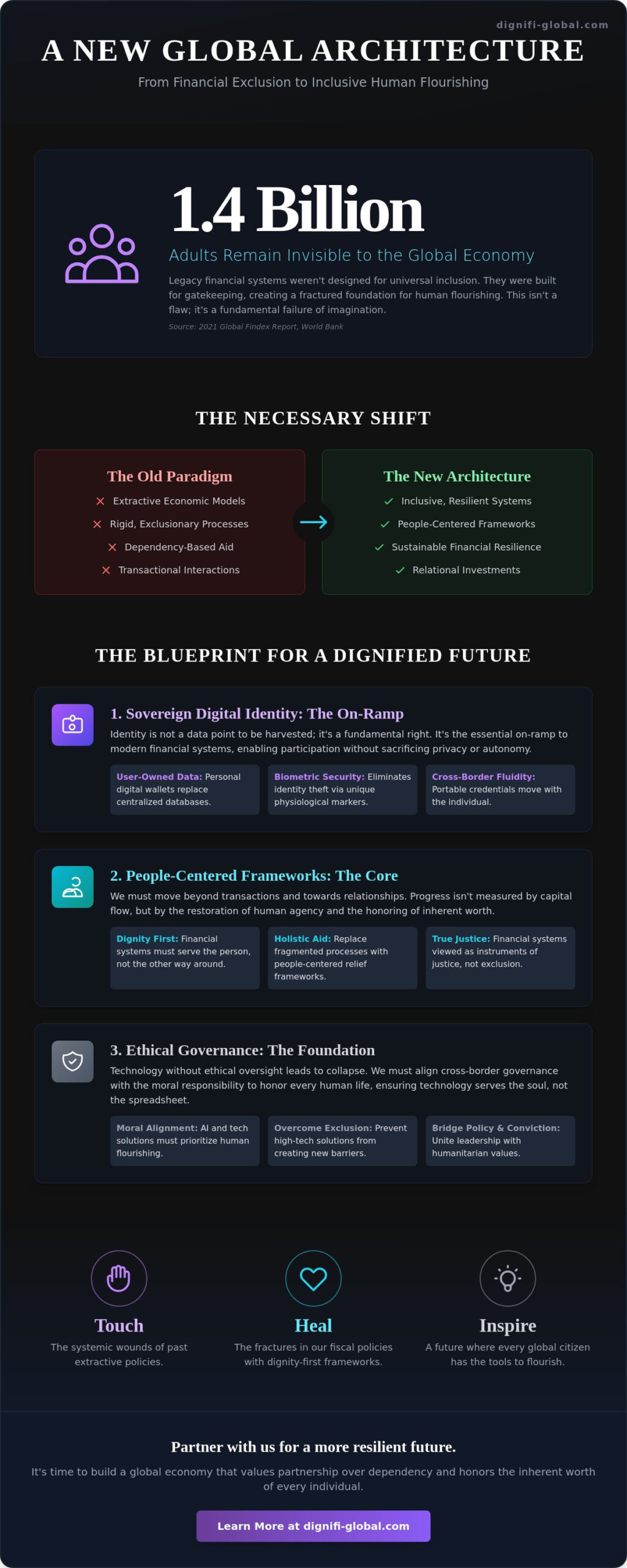
A foundational pillar of this roadmap is the implementation of robust digital identity system design. Traditional aid models often rely on biometric data that can feel like surveillance rather than support. We advocate for sovereign, user-owned identity frameworks that allow individuals to manage their own data. This approach protects the flourishing of the person while ensuring they can access essential services without fear of digital tracking. When we center the individual’s agency, we move from managing populations to honoring lives.
Accountability also requires continuous auditing to monitor for algorithmic bias. We cannot simply deploy a tool and walk away. The 362 AI incidents documented in 2025 serve as a stark reminder that without real-time oversight, systems can quickly drift into harmful patterns. We must establish clear pathways for redress, allowing aid recipients to provide direct feedback and challenge automated decisions. If your organization is ready to move beyond ad-hoc tools toward a sustainable, ethical architecture, partner with us for policy leadership to build a future rooted in dignity.
Establishing Sovereign Digital Identity
Secure, user-owned identity systems form the backbone of accountable aid. By moving beyond simple biometrics toward dignity-based frameworks, we ensure that aid access doesn’t come at the cost of personal privacy. These systems must be designed to protect the most vulnerable from predatory data extraction while facilitating seamless inclusion in financial and social safety nets. This isn’t just about security; it’s about restoring a sense of ownership to those who have lost everything.
Continuous Auditing and Human-in-the-Loop (HITL)
The role of the human in the loop must evolve from a clerical data editor to a strategic ethical guardian. Before any deployment, organizations should conduct Algorithmic Impact Assessments to map potential risks to human rights. This proactive stance ensures that technology remains a tool for empowerment rather than a source of unintended harm. Real-time monitoring is indispensable to prevent algorithmic drift in crisis zones where conditions change by the hour and the stakes are life and death.
Beyond Relief: Building Sustainable Institutional Resilience through Accountable AI
The true measure of our progress is found in the transition from mere emergency response to the creation of sustainable institutional resilience. While traditional aid focuses on the immediate delivery of resources, accountable AI in humanitarian aid offers a path toward long-term empowerment. This evolution is best realized through financial inclusion, where technology serves to integrate displaced populations into the global economy rather than keeping them in a state of perpetual dependency. By architecting high-minded governance frameworks, we ensure that digital systems provide the stability necessary for human flourishing. It’s not about managing a crisis; it’s about honoring a life.
Dignifi-Global™ operates at the vital intersection of technological innovation and human rights, providing the policy leadership required to modernize aid for 2026 and beyond. We don’t just solve technical problems; we build ethical architectures that honor the sanctity of life. Our role is to act as a visionary partner for global institutions, helping them bridge the gap between algorithmic capability and moral responsibility. This isn’t a task for the distant future; it’s an urgent necessity today, as individual AI adoption among humanitarians has reached 75% while organizational readiness remains at a mere 23%. We must bridge this gap to ensure technology serves humanity, not the other way around.
Bridging Technology and Human Rights
The future of aid is a landscape where AI serves as a bridge, not a barrier, to human rights and individual flourishing. When we align AI governance with the UN Sustainable Development Goals (SDGs), we transform data-driven tools into instruments of restoration. Visionary leadership recognizes that technology is a means to an end, not an end in itself. By centering dignity-first principles, we can ensure that every automated decision contributes to a world where the displaced are no longer seen as “problems to be managed” but as lives to be honored. This is the path to restoring the soul of humanitarian mission in the algorithmic age.
Partnering for Global Inclusion
Multilateral partnerships are essential for establishing the global AI standards that will define the next decade of humanitarian work. As we look toward the implementation of the SAFE AI framework on May 19, 2026, the importance of collective accountability becomes clear. Dignifi-Global™ helps institutions modernize their frameworks to meet these new standards, ensuring that resilience is built into the very foundation of their digital strategy. This is the essence of dignity-first global governance: a steady, confident commitment to a future where technology touches the heart, heals the divide, and inspires the soul. Let’s bridge the gap between the head’s innovation and the heart’s mission, building a world where every life is honored with the respect it deserves.
Architecting a Future of Honored Lives
The journey toward accountable AI in humanitarian aid is not a technical constraint but a visionary commitment to the flourishing of every individual. We’ve established that the SAFE AI framework, launching May 19, 2026, provides the foundational architecture required to bridge the gap between rapid innovation and ethical responsibility. By transitioning from unvetted commercial platforms to purpose-built institutional resilience, global leaders ensure that technology serves as a bridge to restoration rather than a barrier to human rights. It’s time to choose partnership over dependency and people over processes to ensure every algorithmic decision honors the life it touches.
Led by Her Excellency Roné de Beauvoir, Dignifi-Global™ operates at the vital intersection of artificial intelligence, digital identity, and global governance. Our “Touch, Heal, Inspire” methodology provides a steady, confident roadmap for institutions ready to move beyond traditional relief toward sustainable, dignity-first frameworks. We invite you to partner with Dignifi-Global™ to architect your Ethical AI Governance Framework and join a movement dedicated to building a more humane digital age. Together, we can restore the soul of humanitarian mission and inspire a future where every life is honored with the prestige it deserves.
Frequently Asked Questions
What is the ‘Humanitarian AI Paradox’ and how does it affect aid delivery?
The Humanitarian AI Paradox is the dangerous tension between the widespread individual use of technology and the lack of institutional governance. As of January 2026, 75% of humanitarian workers use AI weekly, yet only 23% of organizations have a formal policy to guide them. This gap creates a landscape where life-altering decisions are made through unverified “shadow AI” tools, potentially compromising the safety of vulnerable populations and eroding the sacred trust essential for effective aid delivery.
How can AI in humanitarian aid be made truly accountable to the people it serves?
True accountability requires moving beyond abstract ethical statements to implement measurable, transparent governance frameworks. We achieve accountable AI in humanitarian aid by establishing an institutional promise to answer for every algorithmic outcome. This means centering the individual as a life to be honored rather than a problem to be managed. By building systems that prioritize human agency over technical efficiency, we ensure that innovation remains tethered to moral responsibility and human rights.
Is it safe to use commercial AI tools like ChatGPT for humanitarian data analysis?
Using general-purpose commercial platforms for sensitive humanitarian data carries significant risks regarding data sovereignty and “black box” opacity. While 69% of humanitarians currently rely on these tools, they often lack the specialized protection standards required for displacement data. These platforms prioritize data extraction and commercial profit, which can lead to unintended surveillance. We advocate for purpose-built institutional frameworks that offer the transparency and security necessary to protect the flourishing of those in crisis.
What are the primary risks of algorithmic bias in refugee and displacement programs?
The primary risks include automated exclusion from essential services and the potential for “automated” refoulement. The 2026 AI Index Report documented 362 AI incidents in 2025, highlighting how biased algorithms can perpetuate systemic inequalities. When a machine determines eligibility for aid without cultural context, it risks stripping agency from individuals. We must implement rigorous impact assessments to ensure that technology serves as a tool for restoration rather than a mechanism for further marginalization.
How does digital identity intersect with accountable AI in aid delivery?
Sovereign digital identity serves as the foundational backbone of an accountable aid ecosystem. By shifting from intrusive biometrics to user-owned, dignity-based identity frameworks, we empower individuals to control their own digital presence. This intersection ensures that aid access doesn’t require the sacrifice of privacy. It’s a “dignity-first” approach that facilitates inclusive financial system development while protecting the vulnerable from predatory tracking and data exploitation in the algorithmic age.
What role does human oversight (HITL) play in ensuring ethical AI outcomes?
Human-in-the-loop (HITL) must function as a strategic ethical guardian rather than a simple data editor. This role provides the “Contextual Intelligence” that algorithms lack, ensuring that automated suggestions are filtered through a lens of empathy and cultural nuance. Real-time human oversight is indispensable for preventing algorithmic drift in crisis zones. It restores the human touch to the heart of the mission, ensuring that technology heals systemic divides instead of deepening them.
How can institutions build resilience through AI without sacrificing human dignity?
Institutions build resilience by viewing technology as a bridge to long-term flourishing rather than a temporary relief measure. This involves transitioning from emergency response to sustainable models like inclusive financial system development for displaced populations. When we align AI governance with the UN Sustainable Development Goals, we create a future where innovation honors lives. We don’t just manage data; we inspire hope by bridging the gap between technical capability and the warmth of a humanitarian mission.
What are the key components of a ‘Dignity-First’ AI governance framework?
A dignity-first framework includes foundational policy leadership, continuous auditing for bias, and clear pathways for recipient redress. The upcoming launch of the SAFE AI framework on May 19, 2026, provides a verified roadmap for this transition. Key components involve establishing sovereign identity systems and implementing rigorous algorithmic impact assessments before any deployment. These elements work together to ensure that accountable AI in humanitarian aid remains a steady, confident guardian of human worth and global inclusion.