As of the first quarter of 2026, global AI usage has reached 17.8% of the world’s working-age population, yet this rapid growth often masks a crisis of digital sovereignty. You likely feel the weight of a landscape where dependency on Global North technology models threatens to overshadow local agency and widen social inequalities. It’s a challenge to balance the arrival of powerful infrastructure, like the 38,000 GPUs onboarded by the IndiaAI Mission as of February 2026, with the need for protections that truly honor the individual. Effective AI governance in emerging economies is not about mere technical compliance; it’s about the fundamental restoration of human worth within our digital foundations.
This article provides a strategic framework to move beyond the fragmented regulatory approaches seen in the various bills introduced in Brazil and Kenya in early 2026. You’ll discover how to implement a dignity-first roadmap that integrates digital identity with ethical accountability, shifting your focus from temporary humanitarian relief to long-term institutional resilience. We will explore how to build sovereign systems that treat people not as problems to be managed, but as lives to be honored, ensuring that the intersection of technology and policy serves the flourishing of all humanity.
Key Takeaways
- Learn to move beyond passive technology adoption by establishing a sovereign paradigm for AI governance in emerging economies that centers on local ethical contexts.
- Discover how to transition from viewing individuals as “problems to be managed” to honoring them as lives through a dignity-first strategic framework.
- Understand why sovereign digital identity serves as the essential foundational layer for building inclusive financial systems and ethical AI oversight.
- Identify the core pillars of accountability needed to bridge the gap between humanitarian relief and long-term institutional resilience.
- Gain a roadmap for modernizing global policy frameworks that prioritize human flourishing and systemic stability over mere technical compliance.
Beyond the Digital Divide: Why AI Governance in Emerging Economies Requires a New Paradigm
The traditional digital divide is no longer defined by a simple lack of hardware; it’s defined by the power to shape the rules of the digital mind. For years, the Global South has been expected to adopt frameworks designed in distant tech hubs, a “North-to-South” model that frequently ignores local ethical contexts and cultural nuances. This dynamic treats nations as mere recipients of technology rather than sovereign architects of their own future. True AI governance in emerging economies must serve as a tool for sovereign resilience, acting as a shield against data colonialism where the lived experiences of millions are harvested without their consent or benefit. AI governance is the ethical architecture that ensures technology serves the flourishing of the many, not the few.
The Shift from Fragmented Adoption to Strategic Sovereignty
While “soft law” or regulatory sandboxes might offer temporary flexibility, these measures often lack the structural stability required for long-term institutional trust. Recent data from the first quarter of 2026 shows that global AI usage has risen to 17.8%, yet this growth is often accompanied by a “trust deficit” that stalls innovation when citizens don’t feel their fundamental rights are protected. Instead of reactive regulation, we advocate for a shift toward global governance consulting that centers on partnership, not dependency. By establishing foundational ethical principles in AI, nations can build systems that are both innovative and profoundly human, moving from passive participation to strategic leadership.
Addressing the Humanitarian Intersection
Governance is the heartbeat of modern aid and social protection. Without clear frameworks, humanitarian resilience programs risk perpetuating the very biases they aim to solve. Algorithmic bias isn’t just a technical glitch; it’s a moral failure that can exclude vulnerable populations from essential services. We must remember that people are not problems to be managed, but lives to be honored. In February 2026, as the IndiaAI Mission reached its milestone of onboarding 38,000 GPUs, the need for inclusive oversight became even more apparent. Effective AI governance in emerging economies acts as the foundational requirement for sustainable aid, ensuring technology heals rather than harms and bridges the gap between relief and long-term flourishing.
The Pillars of Ethical AI Policy: Centering Human Dignity in Global South Frameworks
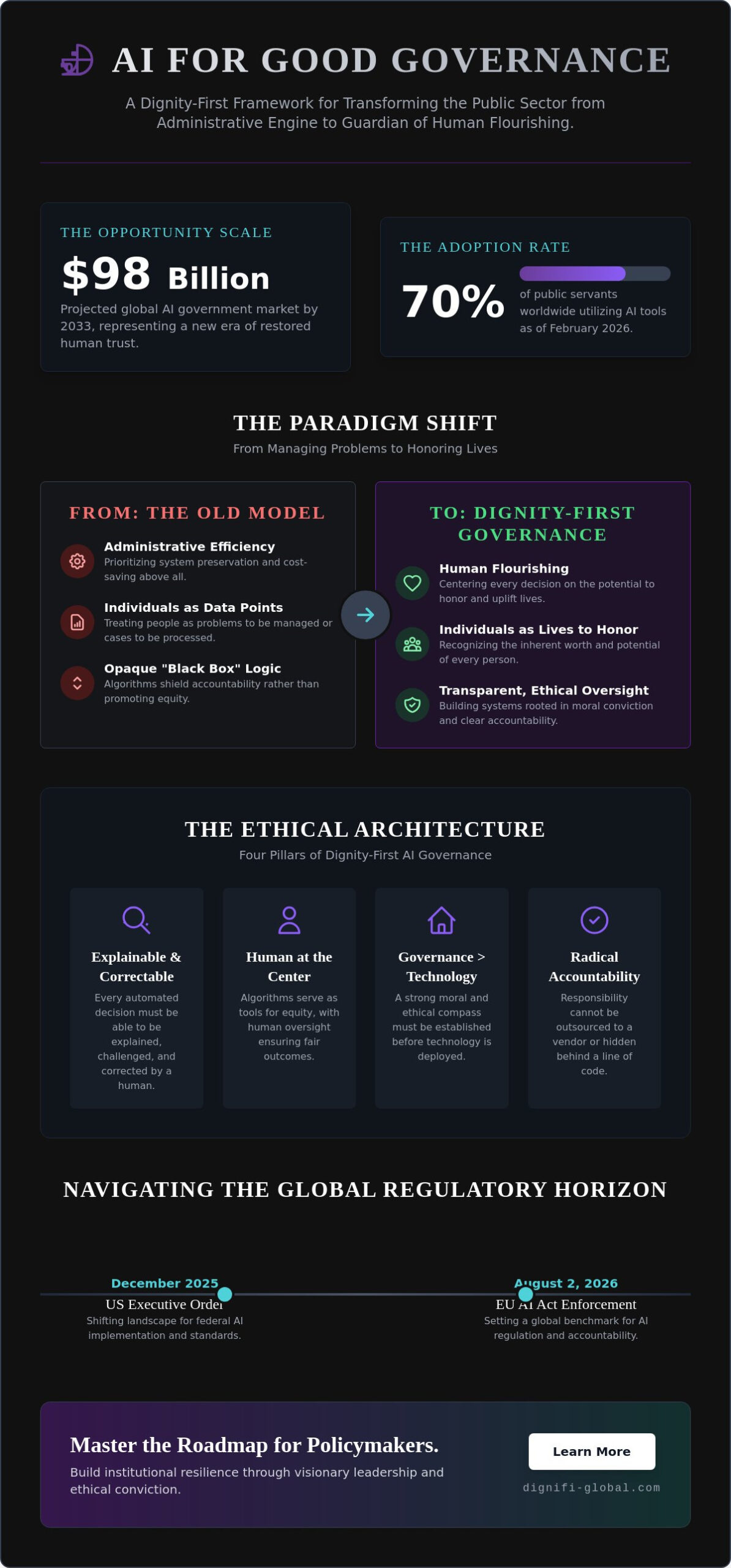
Foundational policy is not a collection of restrictive rules; it is a declaration of what we value as a society. While traditional models focus on technical benchmarks, effective AI governance in emerging economies begins with the recognition that people are not problems to be managed, but lives to be honored. This shift in perspective moves us away from the cold, clinical oversight found in many Global North frameworks toward a model rooted in moral responsibility. By centering human dignity, we ensure that automated systems don’t just process data but actively protect the inherent worth of every individual they touch.
Building this ethical architecture requires establishing clear lines of foundational accountability. It’s not enough to deploy an algorithm; there must be a human responsible for its outcomes. This is particularly vital in the Global South, where the impact of an automated decision can determine a family’s access to healthcare or financial stability. We must also prioritize inclusive design by training systems on diverse, locally relevant datasets. When we use data that reflects the actual communities being served, we bridge the gap between abstract technology and lived reality. Transparency and explainability then act as the final pillars, making complex systems accessible and ensuring that no community is left in the dark about how decisions are made.
The “Touch, Heal, Inspire” Framework for Policy
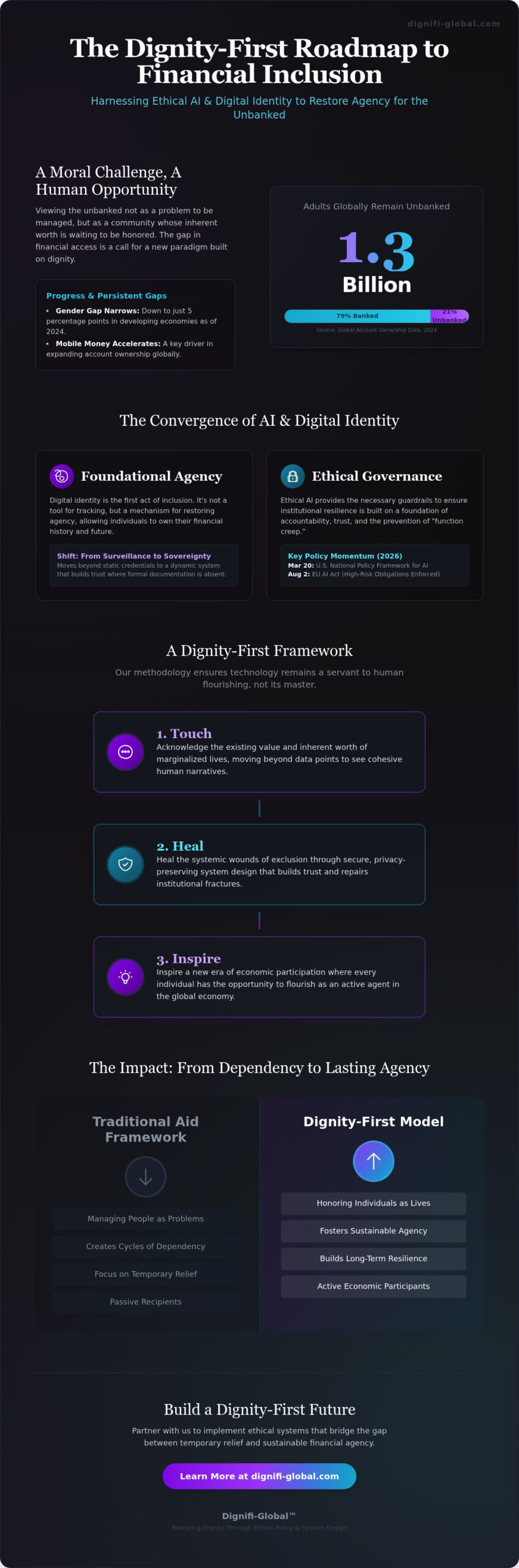
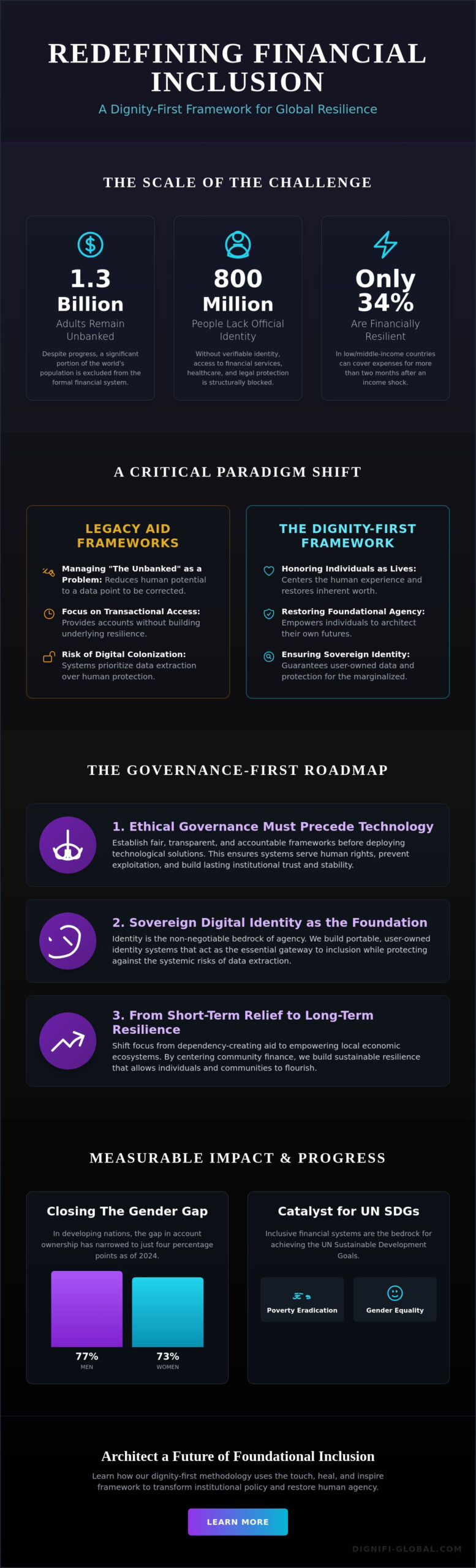
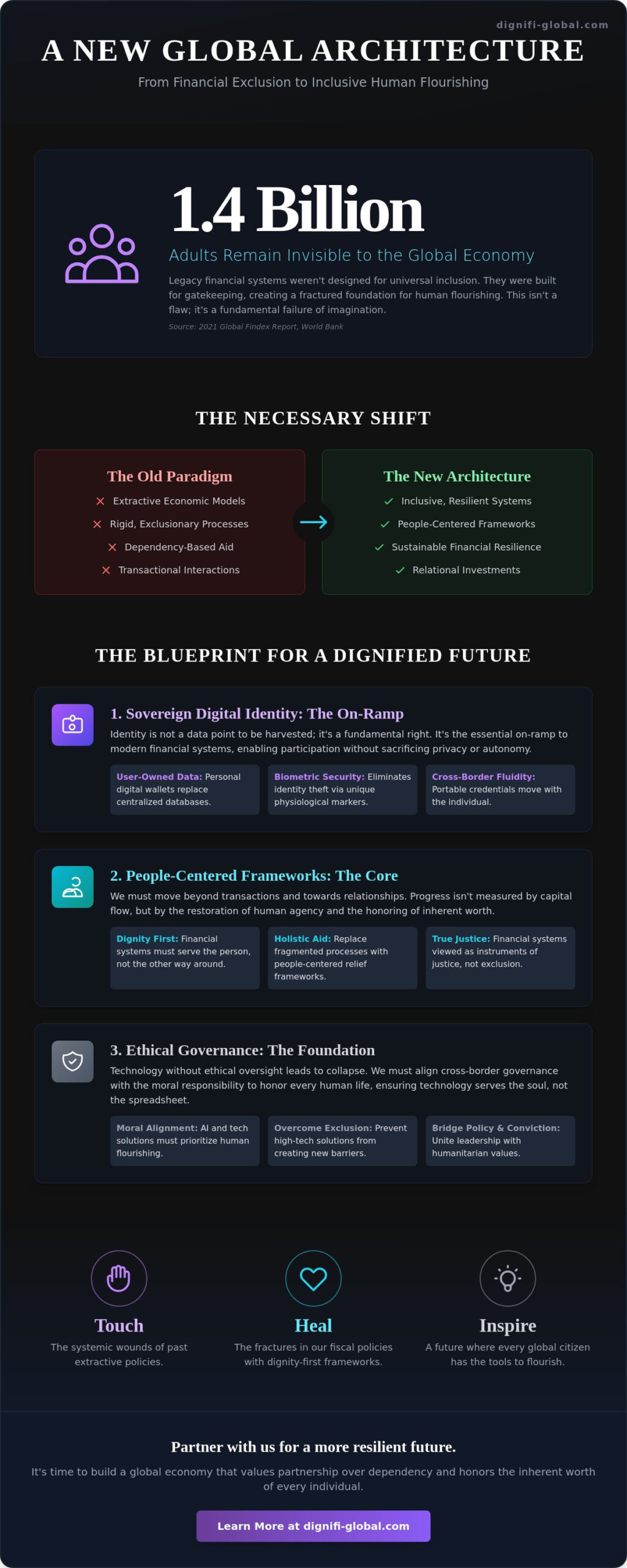
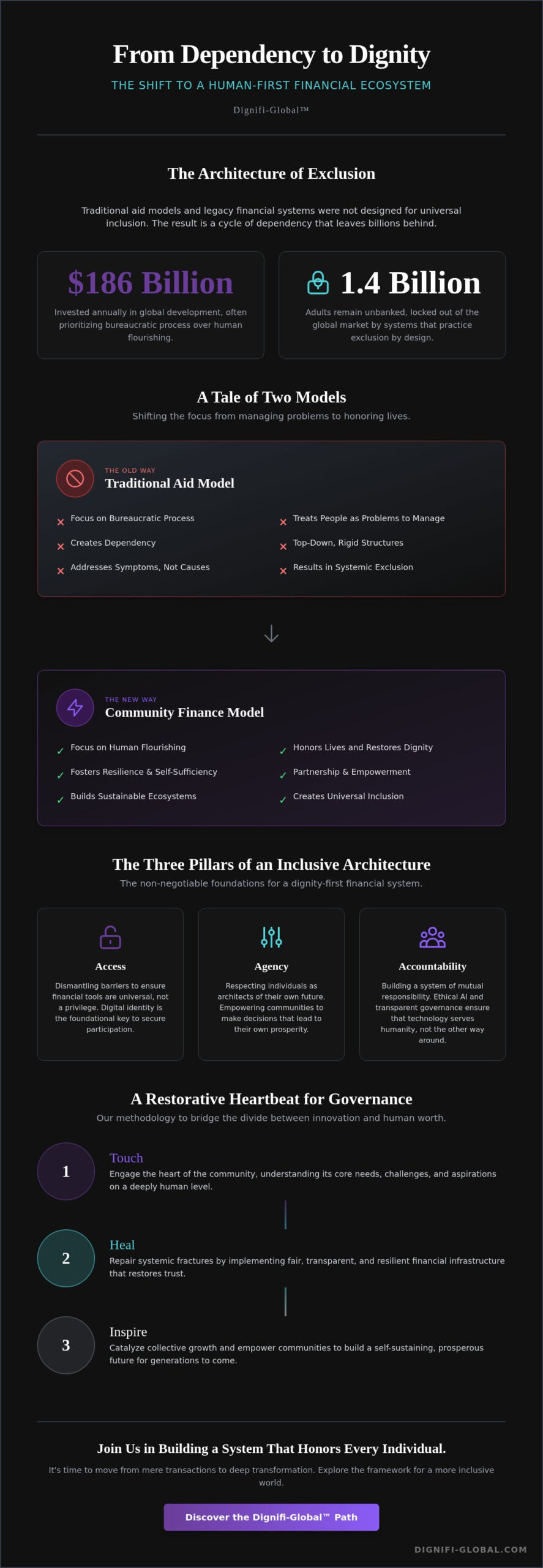
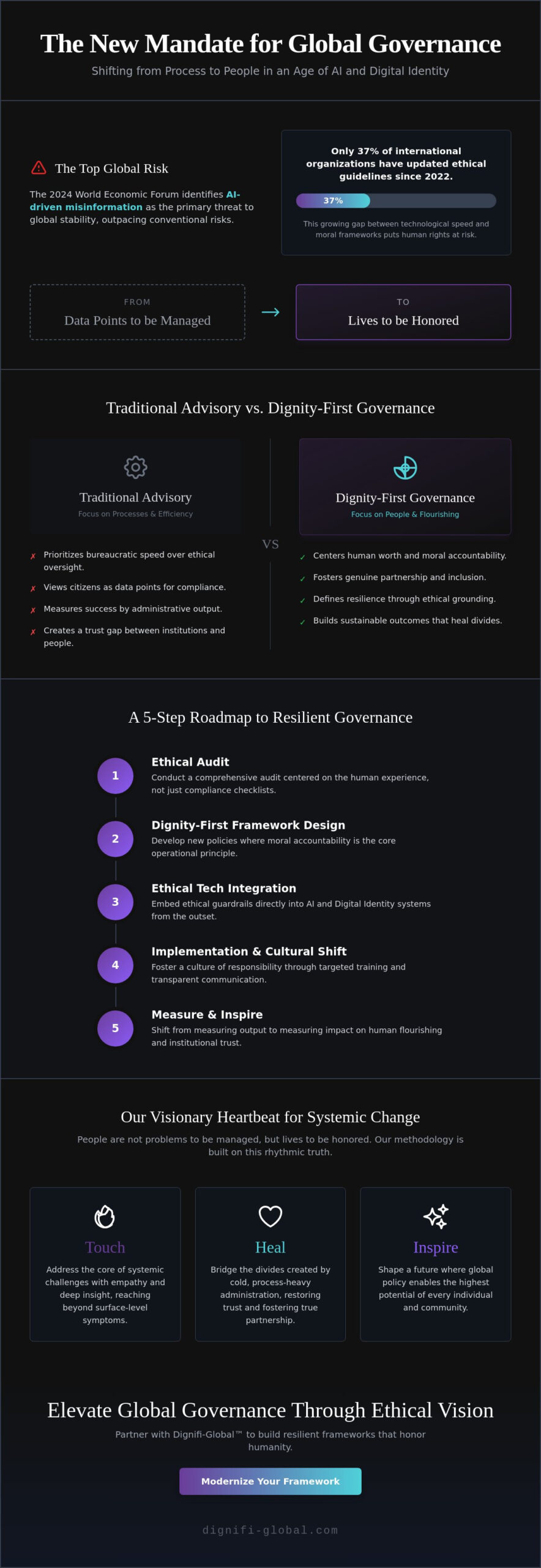
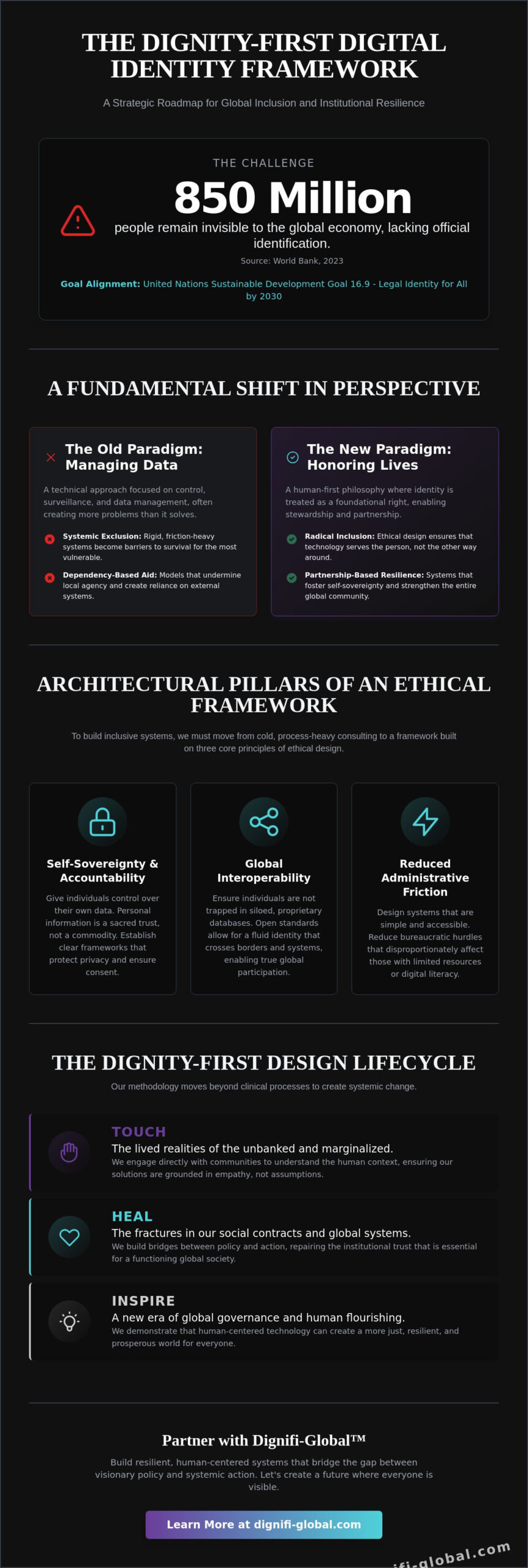
Our methodology follows a rhythmic three-part cadence designed to ground policy in the human experience. First, we Touch the immediate social reality by identifying how AI impacts the daily lives of local communities. Next, we Heal the trust deficit by using governance to restore confidence in public and financial institutions that may have historically marginalized certain groups. Finally, we Inspire a new vision for national flourishing, where technology drives economic independence and honors the cultural heritage of the people. This cycle ensures that policy is a living instrument of progress, not just a static document.
Operationalizing Ethics in Local Contexts
Translating high-minded principles into action requires sophisticated ai governance solutions that are tailored to regional needs. This process often involves the creation of community-led oversight boards that can interpret AI governance strategies through the lens of local customs and legal traditions. We must also uphold the principle of non-refoulement in digital spaces, ensuring that no individual is harmed or excluded by the very systems meant to support them. By balancing rapid innovation with these ethical safeguards, nations can build a future that is both technologically advanced and profoundly humane. If you are ready to lead this transformation, consider how policy leadership can restore dignity to your digital infrastructure.
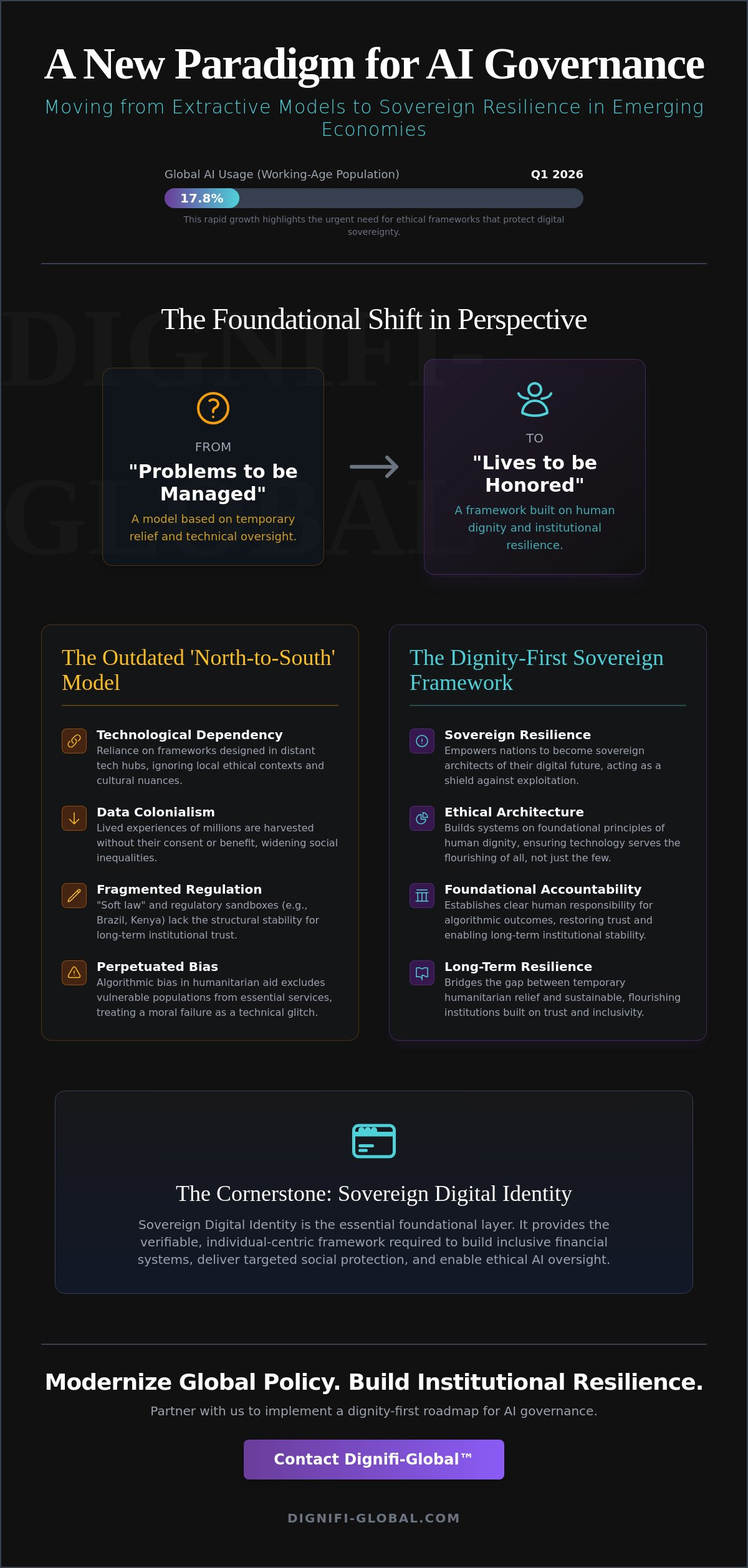
Comparing Regulatory Models: From Fragmented Adoption to Sovereign Resilience
The path to sovereign resilience is not paved with the mirrored laws of other nations, but with the courage to define one’s own ethical boundaries. For many nations, the temptation to “copy-paste” the EU AI Act or US Executive Orders is strong, yet these frameworks often reflect the priorities of mature, capital-heavy markets rather than the specific needs of the Global South. True AI governance in emerging economies requires a move away from fragmented adoption toward a unified, dignity-first model. We see a tension between “Growth-First” models that risk social safeguards and “Ethics-First” models that can stifle local innovation. The goal is a synthesis where regulation doesn’t act as a barrier, but as a foundational layer for trust and national flourishing.
India and Kenya provide compelling examples of this evolution. On February 15, 2026, India launched its “India AI Governance Guidelines,” a principle-based framework that builds upon the techno-legal foundations laid out in their January 23, 2026 Whitepaper. This model leverages large-scale digital public infrastructure (DPI) to democratize access while maintaining oversight. Similarly, the Kenyan Senate introduced the Artificial Intelligence Bill in March 2026, proposing a risk-based regulatory framework that seeks to balance rapid technological diffusion with the protection of civic rights. These nations aren’t just following trends; they’re aligning their digital evolution with the OECD framework for AI in government while asserting their unique cultural and economic sovereignty.
Building a Cooperative Intelligence Constitution
A national AI strategy must act as a digital constitution that protects borders while inviting partnership. This involves aligning private sector innovation with social safeguards that prevent the exploitation of local data. A critical element of this architecture is the integration of interoperability within digital identity system design. When identity systems and AI frameworks speak the same language of accountability, the result is a seamless environment where citizens can access services without sacrificing their privacy or dignity. This alignment ensures that AI governance in emerging economies serves as a catalyst for institutional strength rather than a source of regulatory friction.
Case Studies in Institutional Resilience
Resilience is often forged in the most challenging environments. In post-conflict settings like Somalia, there is a unique opportunity to build ethical AI systems from the ground up, leapfrogging the legacy bureaucracies that often slow down more established economies. By centering human worth at the start of the digital journey, these markets can create aid frameworks that are more transparent and responsive. Multilateral dialogue remains essential to prevent a new global AI divide, ensuring that the “Touch, Heal, Inspire” methodology can be applied across borders. This collaborative approach allows nations to share lessons on restoring trust and honoring lives through technology, turning potential vulnerabilities into pillars of systemic stability.
Operationalizing Inclusion: Integrating Digital Identity with AI Governance
Most discussions regarding artificial intelligence focus heavily on the “brain” of the system, yet they often ignore the “body,” which is the digital identity that connects an algorithm to a living person. In the context of AI governance in emerging economies, this integration is not merely a technical choice; it’s a foundational necessity. Without a secure digital identity, AI governance remains a theoretical exercise without a human anchor. By centering the individual through sovereign identity, we ensure that public service delivery is not just a matter of efficiency, but a commitment to protecting the privacy and agency of the citizens it serves. This approach transforms the relationship between the state and the individual, moving from a model of surveillance to one of digital empowerment.
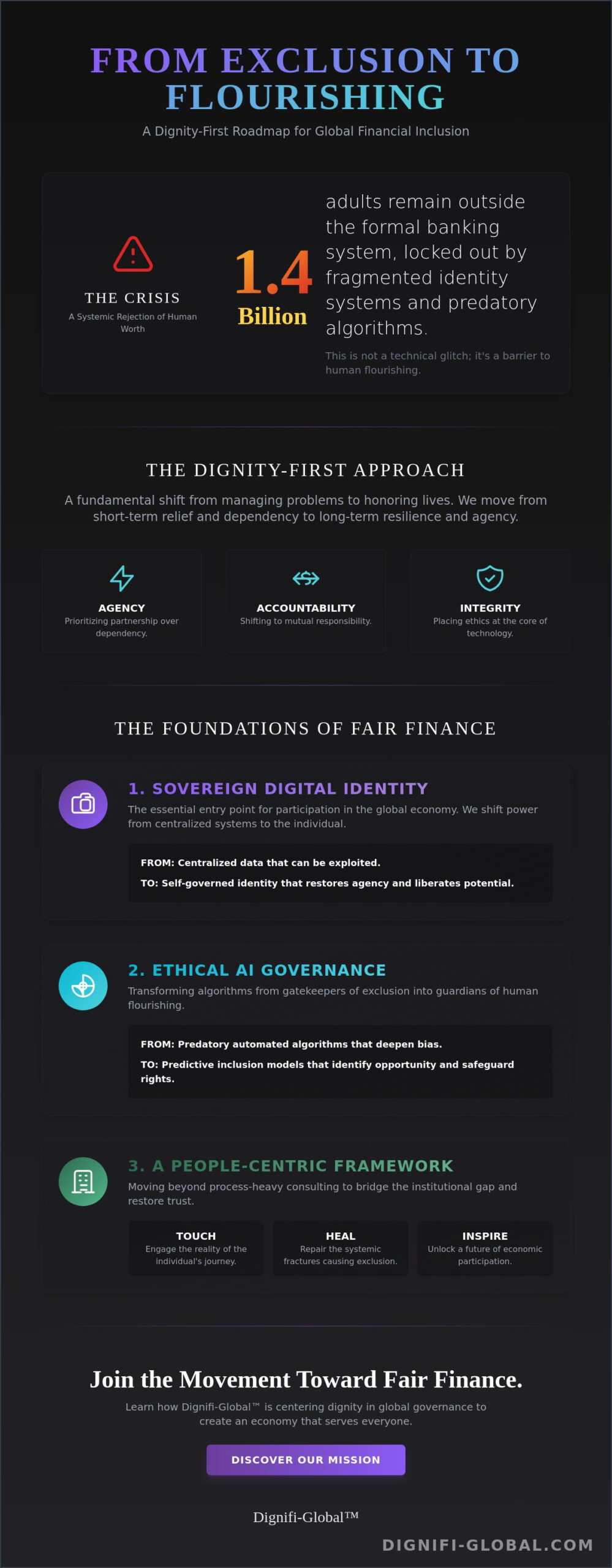
The intersection of sovereign digital identity and financial inclusion is where the most profound shifts in human flourishing occur. When an AI system can verify an individual’s identity without relying on predatory third-party data brokers, it restores power to the marginalized. This creates a bridge between abstract policy and the lived reality of those who have historically been excluded from formal systems. Effective AI governance in emerging economies must therefore treat identity and intelligence as a single, unified architecture designed to honor human worth rather than exploit it for data extraction.
Designing Inclusive Financial Systems
AI-driven credit scoring and aid distribution offer immense promise for closing the wealth gap, provided they’re anchored in robust identity frameworks. We advocate for financial inclusion models that prioritize partnership over dependency. Instead of viewing individuals as risk profiles to be mitigated, these systems should treat them as lives to be honored through economic opportunity. By leveraging sovereign digital IDs, nations can deploy AI that identifies needs and distributes resources without the algorithmic bias that often plagues “copy-paste” Western models. This shift ensures that technology serves as a tool for healing systemic inequality rather than deepening it.
Governance of Digital Public Infrastructure
The governance of Digital Public Infrastructure requires a delicate balance between the promise of empowerment and the risk of mass surveillance. Policymakers must move beyond process-heavy consulting toward a dignity-first roadmap that respects democratic values. Practical steps for auditing AI-integrated ID systems include:
- Implementing data minimization practices to ensure only essential information is processed.
- Establishing clear algorithmic transparency for all automated eligibility decisions.
- Creating accessible redress mechanisms that allow citizens to challenge automated outcomes.
These actions ensure that digital infrastructure remains a public good. If you are ready to build a foundation that restores human worth, explore our policy leadership and identity strategy services.
Partnering for the Future: How Dignifi-Global™ Strengthens Institutional Resilience
The journey toward a dignified digital future is not one that any nation should walk alone. While many advisory firms focus on the clinical implementation of software or the rigid enforcement of processes, Dignifi-Global™ operates at the profound intersection of technology and human rights. We don’t just offer strategic advice; we provide a sanctuary for sovereign leaders who recognize that AI governance in emerging economies is the most critical moral challenge of our time. By centering our work on the inherent worth of every individual, we help nations move away from dependency on external models and toward a state of self-determined, institutional resilience.
Our “dignity-first” roadmap is designed to modernize policy frameworks so they can withstand the rapid shifts of the mid-2020s. We’ve seen global AI usage climb to 17.8% of the working-age population as of the first quarter of 2026, yet many systems remain reactive rather than restorative. We help you transition from the old paradigm of humanitarian relief, which often treats people as problems to be managed, to a new model of sustainable resilience where citizens are honored as the architects of their own flourishing. This shift ensures that the digital evolution heals existing social wounds rather than deepening them through algorithmic exclusion.
Strategic Advisory for Sovereign Leaders
We provide bespoke strategic advisory that respects the unique cultural and institutional contexts of the Global South. Rather than applying a generic template, we design AI policy frameworks that align with local legal traditions while meeting international standards of accountability. This includes modernizing humanitarian frameworks to protect vulnerable populations from the risks identified in the March 2026 Kenyan AI Bill and Brazil’s recent legislative updates. Under the visionary leadership of Her Excellency Roné de Beauvoir, our team offers a level of diplomatic prestige and moral authority that traditional, data-centric firms cannot replicate. We bridge the gap between high-level global engagement and the practical necessity of restoring trust in public institutions.
Building the Future of Humanity Together
Centering dignity in every technological leap is not just an ethical choice; it is a strategic advantage that fosters long-term stability and economic independence. When you choose to partner with us, you are choosing a methodology that follows the rhythmic cadence of Touch, Heal, and Inspire. We begin by touching the reality of your current digital landscape, healing the trust deficits within your systems, and inspiring a vision for a future where technology serves the many. This holistic approach ensures that your national AI and identity strategy is both foundational and aspirational. We invite you to contact Dignifi-Global™ to lead your institutional transformation and join us in building a world where every life is honored and every system is resilient.
Leading the Global Restoration of Human Worth
The transition from fragmented regulatory adoption to sovereign resilience marks a pivotal moment in history. We’ve established that AI governance in emerging economies must be more than a technical hurdle; it’s a moral imperative to protect digital borders and honor local contexts. By integrating digital identity with ethical intelligence, nations can bridge the gap between temporary humanitarian relief and long-term institutional stability. This approach ensures that technology serves as a tool for flourishing, not a mechanism for exclusion.
As pioneers of the dignity-first strategic roadmap, Dignifi-Global™ stands ready to guide this transformation. Led by Her Excellency Roné de Beauvoir, our organization operates at the essential intersection of artificial intelligence, digital identity, and financial inclusion. We remain committed to the belief that people are not problems to be managed, but lives to be honored. Partner with Dignifi-Global™ to design your dignity-first AI governance framework. The future of humanity is not a challenge to be feared, but a masterpiece to be built together with wisdom and steady confidence.
Frequently Asked Questions
What is the primary challenge of AI governance in emerging economies?
The primary challenge of AI governance in emerging economies is the “regulatory lag” where technical speed outpaces the development of ethical safeguards. This gap often forces nations into a reactive stance, trying to manage the consequences of technologies designed without their specific social contexts in mind. Without a proactive framework, there is a risk that institutional trust will erode, leaving citizens vulnerable to systems that do not respect their local agency or sovereignty.
How does digital identity relate to AI governance frameworks?
Digital identity provides the essential “human anchor” that connects an algorithm to a recognized individual with inherent rights. It ensures that automated systems are not just processing data points, but are interacting with lives that must be honored. By integrating sovereign identity into governance, we create a feedback loop where decisions can be traced back to a person, ensuring that accountability is foundational to every technological interaction.
Can emerging economies afford to prioritize ethics over rapid AI adoption?
Nations cannot afford to bypass ethics, as foundational trust is the bedrock of any digital market. While rapid adoption is often prioritized for short-term gains, history shows that systems built without moral safeguards suffer from public rejection and institutional collapse. Prioritizing human dignity creates a stable environment that attracts high-quality global investment and ensures that national progress is not derailed by social instability or the erosion of civic rights.
What are the risks of using Global North AI policies in the Global South?
The risk of adopting Global North policies is the unintended facilitation of “contextual blindness,” where foreign frameworks ignore the unique socio-economic realities of the Global South. These models often prioritize capital efficiency over the restoration of human worth, which can deepen existing inequalities. Without a dignity-first lens, imported regulation fails to address the specific intersection of financial exclusion and civic rights that define the lived reality of billions.
How can AI governance improve humanitarian aid resilience?
AI governance improves humanitarian resilience by shifting the focus from immediate relief to long-term institutional stability. Effective frameworks ensure that predictive models for aid distribution are transparent and free from the algorithmic bias that often excludes the most vulnerable. This structural stability allows organizations to move from managing crisis to healing communities, ensuring that technology serves as a bridge toward future economic independence and national flourishing.
What role does Dignifi-Global™ play in national policy design?
Dignifi-Global™ acts as a visionary partner that bridges the gap between high-level policy and human rights. We design bespoke frameworks that center on the intersection of artificial intelligence, digital identity, and financial inclusion. Our team provides the strategic leadership necessary to restore institutional trust and modernize aid frameworks for the challenges of 2026 and beyond, always centering the flourishing of humanity through a dignity-first approach.
Is there a global standard for AI governance in emerging markets?
There is no single global standard, as nations are increasingly developing “hybrid” models that combine regulatory sandboxes with specific sector-based laws. For example, Brazil’s ongoing review of Bill No. 2338/2023 in early 2026 demonstrates a move toward a national legal framework that balances innovation with rights protection. This movement allows for a diverse global landscape where each nation asserts its own sovereignty while maintaining interoperability with international ethical standards.
How do we ensure AI systems do not deepen existing social inequalities?
Ensuring that AI doesn’t deepen inequality requires a commitment to inclusive design and constant algorithmic recalibration. We must move beyond viewing people as data sets to be managed and instead treat them as lives to be honored. By implementing rigorous audits for bias and prioritizing local datasets, we can build AI governance in emerging economies that restores equity and ensures that the benefits of intelligence are diffused across all sectors of society.