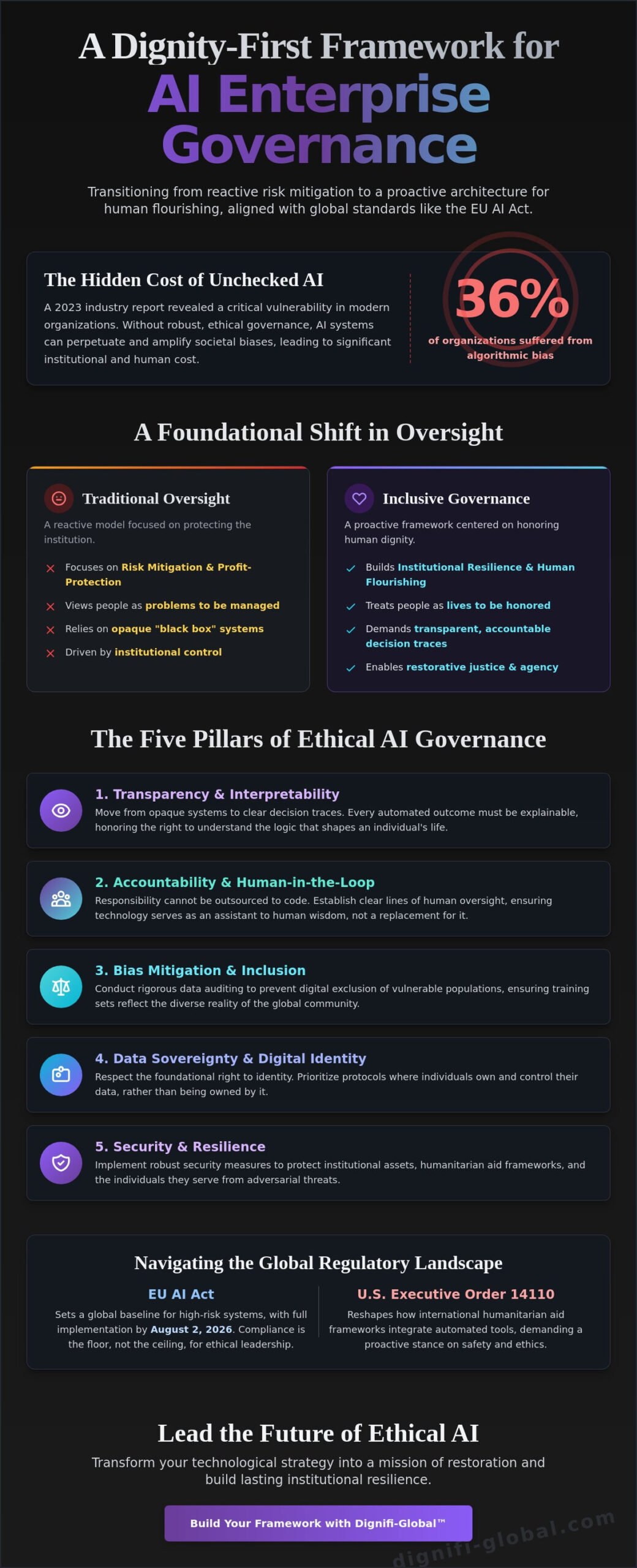
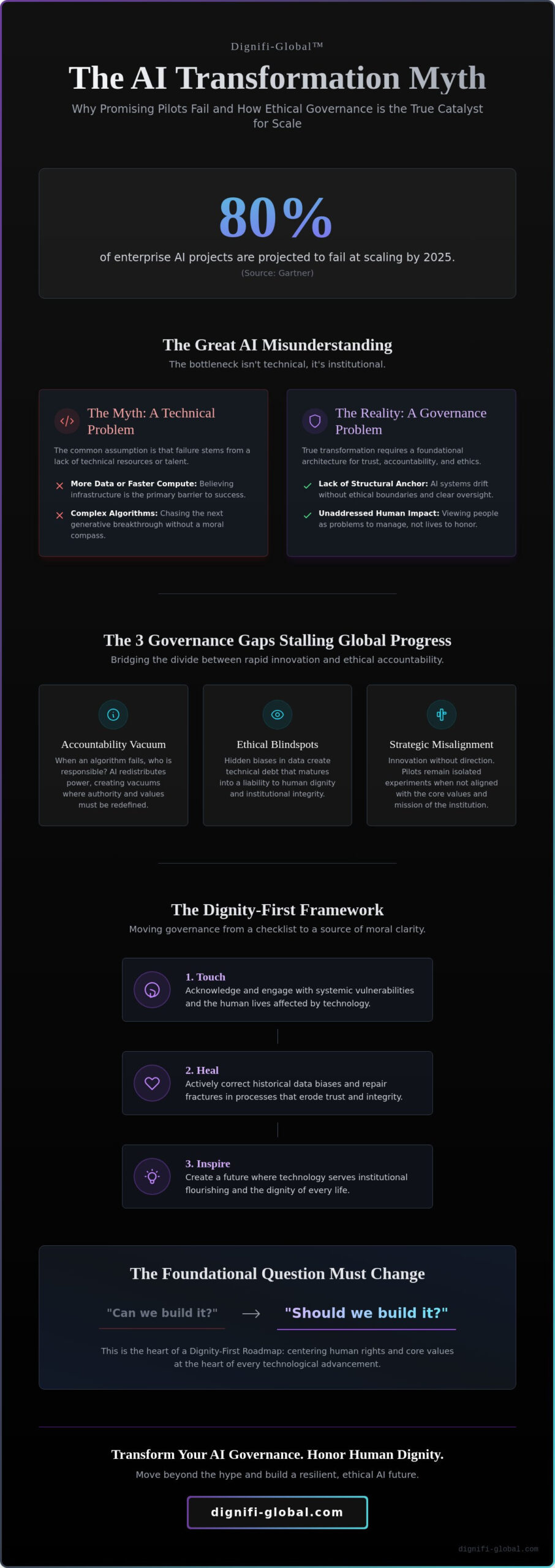
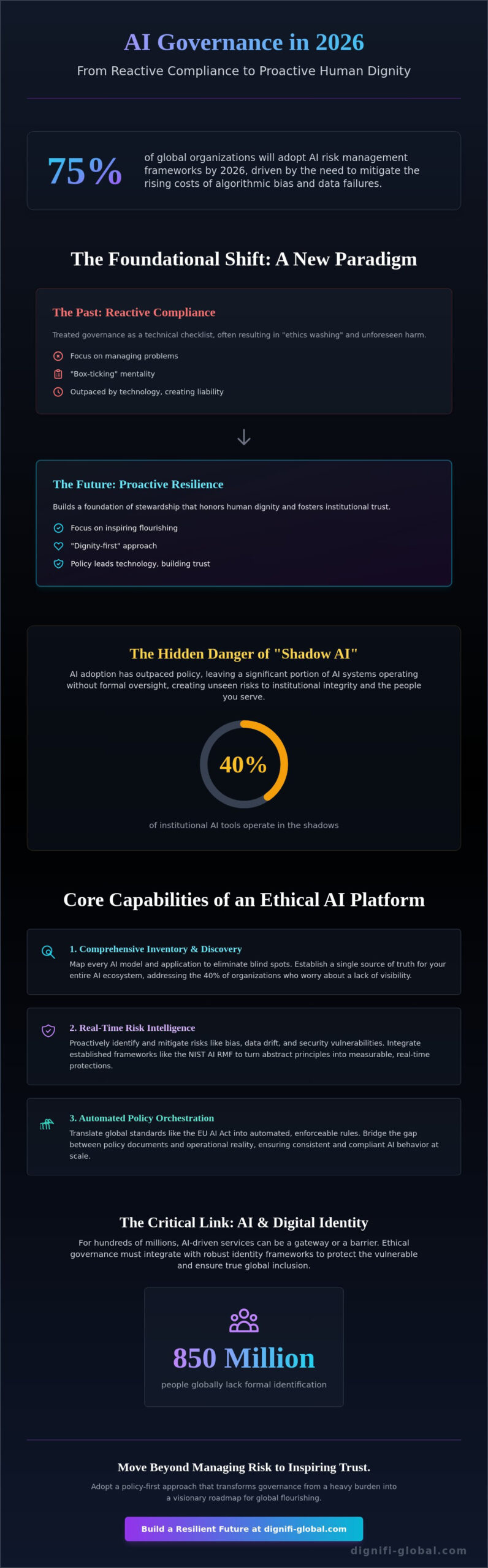
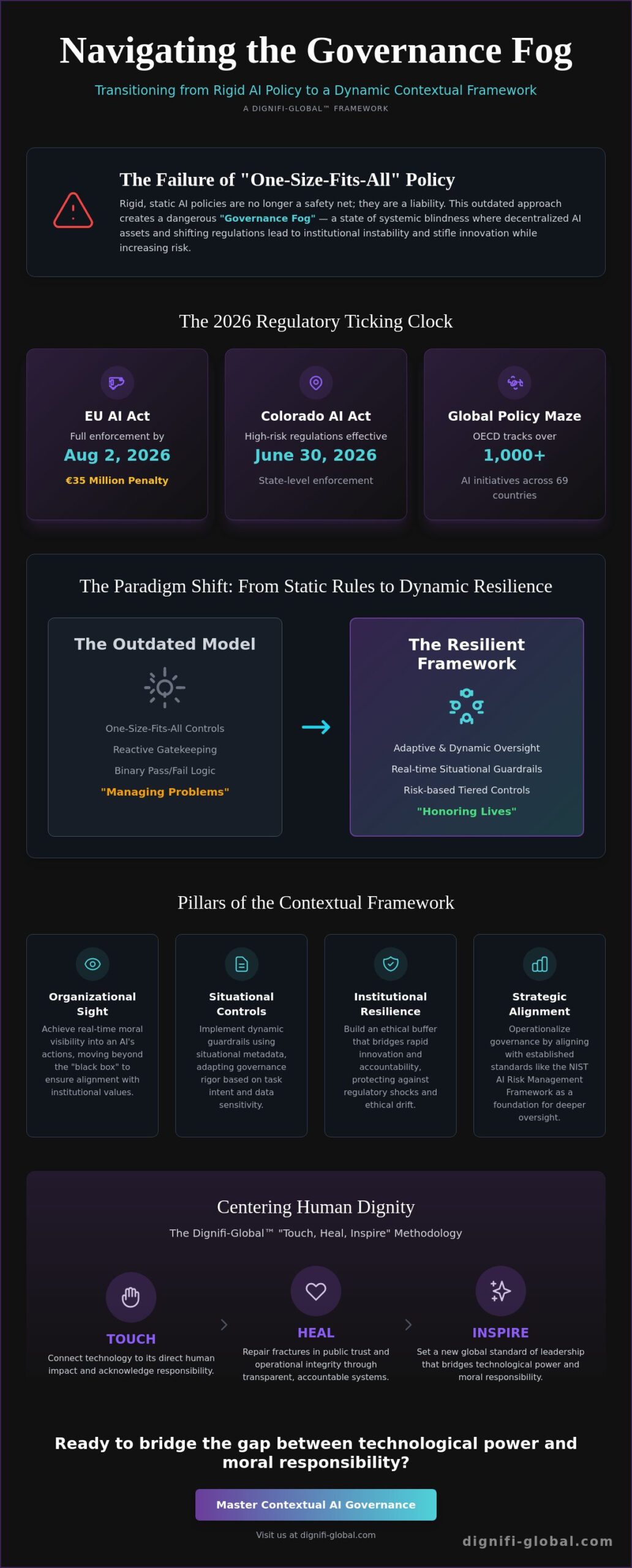
The rigid, one-size-fits-all AI policy your organization adopted last year isn’t a safety net; it’s a liability. As the EU AI Act reaches full enforcement on August 2, 2026, and California’s frontier model transparency requirements take hold, the era of static compliance has ended. You likely feel the weight of this “governance fog,” where decentralized AI assets and shifting jurisdictional rules create a sense of systemic instability. We understand that your mission isn’t just to avoid a €35 million penalty, but to ensure your technology serves the flourishing of the human spirit.
By mastering the ai contextual governance framework, you’ll learn to transition from reactive gatekeeping to a dynamic model that centers human dignity at every intersection of data and decision. We’ll show you how to move from “managing problems” to “honoring lives” through scalable, situational controls that align with the NIST AI Risk Management Framework. This journey will touch the core of your operational intent, heal the fractures in public trust, and inspire a new standard of global leadership that bridges the gap between technological power and moral responsibility.
Key Takeaways
- Discover how to transition from rigid, one-size-fits-all policies to a dynamic ai contextual governance framework that adapts based on task intent and data sensitivity.
- Develop “Organizational Sight” by utilizing situational metadata to implement real-time guardrails that protect both institutional integrity and individual rights.
- Strengthen your organization’s resilience against shifting global regulations by building an ethical buffer that bridges the gap between rapid innovation and accountability.
- Follow a strategic roadmap to inventory your AI assets and establish situation-specific risk thresholds that align technological behavior with organizational intent.
- Learn to apply the Dignifi-Global™ “Touch, Heal, Inspire” methodology to your AI strategy, ensuring technology honors lives rather than simply managing problems.
Beyond Static Rules: Defining the AI Contextual Governance Framework
Governance is not a static gate to be guarded; it is a living lens through which we view our moral and operational responsibilities. For too long, institutions have relied on “static governance,” a model that applies the same rigid, binary controls to every system regardless of its impact. This outdated approach treats a retail pricing algorithm with the same gravity as a model distributing life-saving humanitarian aid. Such a lack of distinction is not safety, it is a failure of vision. The ai contextual governance framework emerges as a necessary evolution, operating as a dynamic oversight model that adapts its rigor based on task intent and data sensitivity.
By centering context, we move away from the cold, clinical application of rules and toward a system that honors human nuance. This framework recognizes that the risk profile of an AI agent depends entirely on its environment. We are currently witnessing the rise of a “Governance Fog,” a state of systemic blindness where leaders lack unified visibility into decentralized AI assets. In this fog, traditional binders of policy fail because they cannot account for the 1,000 plus AI policy initiatives currently tracked by the OECD across 69 countries. We must bridge the gap between technical oversight and algorithmic governance to ensure that our tools reflect our deepest values.
The Failure of One-Size-Fits-All AI Policy
Generic rules create a dangerous paradox: they stifle innovation through over-regulation while simultaneously increasing risk through under-regulation. When policies are too broad, they fail to catch the specific ethical failures that occur at the intersection of technology and human rights. Static policy creates institutional vulnerability in global aid environments by ignoring the shifting realities of human need in favor of fixed, technical parameters. This disconnect exists because technical model validation rarely accounts for the actual business-specific contextual intelligence required for responsible deployment. We don’t need more processes; we need more partnership between our ethical mandates and our digital execution.
Why 2026 Demands Contextual Intelligence
As of May 2026, the transition from experimental AI to integrated institutional AI is complete. With the EU AI Act reaching full enforcement on August 2, 2026, and Colorado’s AI Act implementing high-risk regulations on June 30, 2026, compliance is now a continuous operational function. In the landscape of financial inclusion, context determines “acceptable risk” by balancing the urgency of access with the necessity of protection. Organizations must move beyond the “problem-management” mindset and embrace a “dignity-first” perspective. To achieve this, leaders should explore the integration of AI governance business-specific contextual intelligence to ensure their systems remain resilient against regulatory shocks and ethical drift.
The Pillars of Contextual Organizational Sight Validation
Organizational Sight is the institutional capacity to perceive the ethical resonance of an AI’s actions in real-time. It is not merely a technical audit; it is a commitment to moral visibility. To achieve this, we must move beyond the opaque “black box” and toward transparent, context-aware assets. This visibility is achieved through Contextual Organizational Sight Validation, a process that ensures every automated decision aligns with the foundational values of the institution. By centering this validation, we transform AI from a cold tool of efficiency into a partner in human dignity.
The ai contextual governance framework relies on this sight to bridge the gap between abstract policy and concrete action. While voluntary standards like the NIST AI Risk Management Framework, released in January 2023, provide a structured starting point for risk assessment, true institutional resilience requires a deeper, situation-specific layer of oversight. This layer functions by integrating human-in-the-loop oversight at critical decision nodes. It ensures that machines don’t make life-altering choices without empathetic verification. We must remember that people are not problems to be managed; they are lives to be honored.
Metadata as the Foundation of Governance
The architecture of this sight rests upon situational metadata. We must capture the intent of the task, the sensitivity of the data involved, the specific environment of deployment, and the potential impact on the end-user. Automating this collection is essential. By embedding metadata triggers into the development cycle, organizations can maintain velocity without sacrificing accountability. We don’t just need data; we need the “why” behind the data to move from reactive management to proactive protection. This transition allows the institution to see not just what the AI is doing, but what it intends to achieve.
Validating Organizational Intent
Validation is the process of mapping AI outputs back to the core mission of the institution. Without this alignment, AI systems often suffer from “mission drift,” particularly in high-stakes environments like humanitarian aid distribution. Contextual sight is a fundamental prerequisite for effective ai governance solutions. It allows leaders to verify that an algorithm designed for inclusion doesn’t accidentally become an engine for exclusion. To lead with confidence, institutions must first ensure their technology honors the lives it touches. If you’re ready to move beyond process-heavy consulting, consider how a dignity-first advisory partner can help restore clarity to your digital ecosystem.
Institutional Resilience: Bridging AI Innovation and Ethical Accountability
Institutional resilience is the capacity to honor our ethical mandates while navigating the relentless tide of technological change. In the age of intelligence, resilience is not merely survival; it is the flourishing of our core values amidst systemic shifts. The ai contextual governance framework serves as a vital resilience buffer, shielding organizations from the regulatory shocks that define our current landscape. As the EU AI Act reaches full enforcement on August 2, 2026, the cost of non-compliance has risen to €35 million or 7% of global turnover. A contextual approach allows institutions to absorb these pressures without sacrificing their innovative spirit.
The most common objection to governance is the fear that it acts as a gate, blocking the path to progress. This is a narrow perspective that we must move beyond. Effective governance is actually a lens that brings institutional intent into focus. When you have a clear view of your risk thresholds, you can innovate with greater speed and less fear. This clarity is supported by institutional benchmarks like GAO’s AI Accountability Framework, which emphasizes that monitoring and performance are not separate from governance but are the very heart of it. By centering accountability, we restore trust in the systems that shape our future.
Traditional vs. Contextual Governance Frameworks
Traditional governance is often reactive, treating rules as static checkboxes that expire the moment a model is deployed. In contrast, the ai contextual governance framework is proactive and adaptive. It recognizes that low-risk models, such as internal document summarizers, require faster deployment pathways than high-stakes systems. This transition from being risk-averse to being risk-aware provides a superior return on investment by reducing administrative drag. A foundational element of this adaptability is digital identity system design, which allows institutions to verify the context of a user’s interaction with absolute certainty.
The Ethics of Global Inclusion
Contextual governance is the shield that protects vulnerable populations from the silent harms of algorithmic bias. By centering the human experience, we ensure that AI serves as a bridge to opportunity rather than a barrier to entry. This is particularly critical in the landscape of financial inclusion, where ethical oversight prevents automated systems from reinforcing historical cycles of poverty. We believe in partnership over dependency. Transparent governance empowers individuals to engage with technology on their own terms, restoring the dignity that data-centric models often strip away. When we align AI behavior with human worth, we don’t just manage a system; we honor a life.
A Strategic Roadmap for Operationalizing Contextual AI Governance
Governance is an active practice of institutional wisdom. It’s not a static document stored in a digital binder, but a rhythmic commitment to systemic integrity. Implementing an ai contextual governance framework requires a shift from passive compliance to active leadership. This roadmap provides the structure to bridge the gap between high-level ethical principles and the daily execution of automated intelligence. By following these steps, institutions can move from a state of reactive uncertainty to one of calm, steady confidence.
The journey toward operational resilience begins with five foundational actions. First, catalog every AI asset within the organization, ensuring no system remains hidden. Second, define risk thresholds that change based on the specific situation. Third, deploy automated monitoring to catch deviations before they become crises. Fourth, establish clear lines of human accountability, centering people over processes. Finally, commit to a cycle of continuous auditing that learns from operational reality. This is how we move beyond the cold, clinical management of data and toward the honoring of the lives that data represents.
Inventory and Contextual Classification
The first step in restoring sight to your institution is identifying “shadow AI,” those unauthorized tools and agents that emerge when formal systems are too slow. As of January 1, 2026, California’s new transparency laws mandate that developers of generative systems publish summaries of their training data. Organizations must go further, categorizing every model based on its potential impact on human flourishing and institutional risk. This classification should align with the highest global governance consulting standards. We don’t just ask what the model does; we ask whom it affects and what its intent truly is.
Implementing Automated Guardrails
Static policies fail because they cannot keep pace with the speed of algorithmic decision-making. We must implement policy-as-code to enforce contextual boundaries in real-time, creating a system that can pause or pivot when a risk threshold is breached. These guardrails feed into dashboards designed to provide “Strategic Visibility” to the Board, ensuring leaders have the clarity needed for high-level stewardship. Automation handles the repetitive oversight, yet we must always balance this with ethical human judgment in high-stakes scenarios. To begin your journey toward systemic integrity, partner with our global governance advisory team to build a framework that protects and inspires.
Centering Human Dignity: The Dignifi-Global™ Methodology
Governance is more than a set of technical protocols; it is a manifestation of our deepest ethical convictions. At Dignifi-Global™, we believe that the true measure of a system is not its efficiency, but its capacity to honor the inherent worth of every individual it touches. While traditional consulting firms view governance as a series of problems to be managed, we view it as a sacred opportunity to protect and elevate human lives. This shift in perspective is the foundation of our “Dignity-First” methodology, a lens that transforms cold data into a catalyst for global flourishing. By adopting the ai contextual governance framework, your institution moves beyond the cold, clinical application of rules and toward a model of partnership over dependency.
Our approach is built upon a rhythmic three-part cadence: Touch, Heal, Inspire. This framework allows us to modernize humanitarian aid and institutional structures by ensuring that technology serves humanity, rather than the other way around. By integrating this philosophy into your core strategy, you move beyond the “Governance Fog” and toward a future of systemic resilience and public trust. We don’t just seek to mitigate risk; we seek to restore the foundational bond between global institutions and the people they are called to serve.
Touch: Identifying the Intersection of Humanity and Technology
We begin by identifying the profound intersection where technology meets the human spirit. Our process of “Touching” involves a deep analysis of how every AI deployment affects the most marginalized members of our global community. We don’t just audit for risk; we listen for the human impact. This stage requires establishing a foundational ethical conviction at the board level, ensuring that leadership views digital identity and automated systems as tools for empowerment. When we center the marginalized, we create a more stable and inclusive foundation for all. This initial contact is the prerequisite for a truly effective ai contextual governance framework, as it defines the moral parameters of the system before the first line of code is executed.
Heal and Inspire: Restoring Trust through Governance
Healing begins when we address the institutional fractures caused by unmanaged AI risks and the erosion of public trust. We don’t merely patch holes; we heal the relationship between the institution and the people it serves by restoring accountability and transparency. This restoration then paves the way for Inspiration. We invite global leaders to see governance not as a burdensome gate, but as a visionary tool for systemic flourishing. The future of our global society depends on the “Ethical Visionary,” the leader who refuses to view individuals as data points and instead sees lives to be honored.
We invite you to lead this transition from reactive oversight to strategic flourishing. By adopting a tailored roadmap rooted in dignity, you can ensure your institution remains a beacon of trust and inclusion in a rapidly changing world. Contact our advisory team today to begin your journey toward a more humane digital future.
Restoring the Nexus of Technology and Human Worth
The shift from rigid compliance to dynamic oversight is no longer optional; it’s the foundational requirement for institutional survival in 2026. By embracing an ai contextual governance framework, you move beyond the “Governance Fog” into a state of strategic clarity where every automated decision honors human dignity. We’ve explored how situational metadata provides organizational sight and how resilience buffers against the €35 million penalties of the EU AI Act. This isn’t just about managing risk. It’s about centering the flourishing of the human spirit within our digital systems.
True leadership requires a departure from process-heavy consulting toward a partnership rooted in moral responsibility. Led by Her Excellency Roné de Beauvoir, our specialized advisory team uses a proprietary Dignity-First methodology to bridge the gap between innovation and humanitarian resilience. We invite you to Partner with Dignifi-Global™ to Modernize Your AI Governance Framework and lead the charge toward global inclusion. The future of humanity is not a problem to be solved, but a destiny to be honored. Let’s build a more humane world together.
Frequently Asked Questions
What is the primary difference between traditional AI governance and a contextual framework?
Traditional governance relies on static, binary rules that apply the same oversight to every system regardless of its purpose. In contrast, an ai contextual governance framework acts as a dynamic lens, adjusting its rigor based on the specific intent of the task and the sensitivity of the data. This shift ensures that high-stakes humanitarian models receive deeper ethical validation than low-risk internal tools, allowing for both safety and institutional speed.
How does an AI contextual governance framework improve institutional resilience?
Resilience is strengthened by creating an ethical buffer that allows organizations to absorb regulatory shocks without halting innovation. By June 30, 2026, the Colorado AI Act will require high-risk systems to meet strict standards; contextual models allow institutions to identify these risks early. This proactive approach prevents the systemic paralysis that often follows new legislation, ensuring the core mission remains stable amidst global technological shifts.
Can contextual governance be automated, or does it require constant human intervention?
Contextual governance utilizes policy-as-code to automate the enforcement of boundaries in real-time, yet it preserves human judgment for critical decision nodes. While automated guardrails handle 90% of routine monitoring, high-stakes scenarios involving human rights require empathetic verification. This hybrid model ensures that technology never operates in a moral vacuum, bridging the gap between digital efficiency and the human responsibility to honor lives.
How do we implement contextual governance in a decentralized global organization?
Implementation in decentralized organizations requires establishing “Organizational Sight” through a unified metadata layer that spans all jurisdictions. By August 2, 2025, transparency requirements for general-purpose AI models became mandatory under the EU AI Act. Global institutions must use these standards as a baseline while applying situation-specific thresholds that respect local cultural contexts. This approach replaces fragmented oversight with a cohesive, dignity-first strategy across all borders.
What role does digital identity play in validating AI context?
Digital identity serves as the foundational anchor that verifies the context of every interaction between a human and an AI system. It provides the necessary data to determine if a user’s rights are being protected or if a model is operating within its intended ethical boundaries. Without robust identity design, governance remains blind to the specific human impact, making it impossible to restore trust in automated financial or humanitarian systems.
Is an AI contextual governance framework compliant with global regulatory standards like the EU AI Act?
Yes, an ai contextual governance framework is designed to meet and exceed the risk-based requirements of the EU AI Act, which becomes fully enforceable on August 2, 2026. By categorizing AI systems based on situational risk, organizations can directly align with the Act’s prohibitions on social scoring and biometric surveillance. This methodology ensures that compliance is not a one-time check but a continuous operational function embedded in every decision.
How does Dignifi-Global™ help boards overcome Governance Fog?
Dignifi-Global™ helps boards clear the Governance Fog by providing strategic visibility that aligns AI behavior with the institution’s moral mandate. Through our “Touch, Heal, Inspire” framework, we move leadership away from process-heavy consulting toward a visionary stewardship of technology. We help boards see that people are not problems to be managed, restoring the clarity needed to lead with ethical conviction and long-term perspective.